
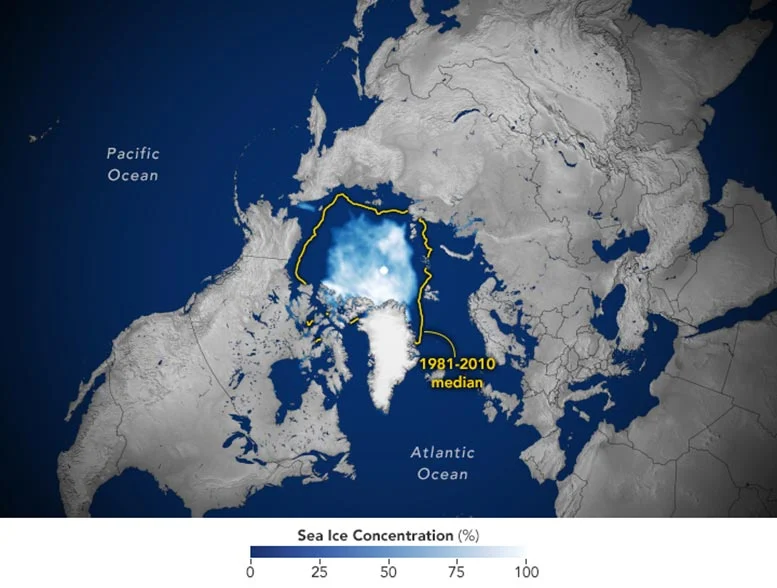
Throughout the year, the Arctic sea ice naturally expands and contracts in response to seasonal variations.Data collected over the past 46 years from satellites show a consistent pattern: more extensive melting during the summer months and reduced ice formation during the winter.Arctic and Antarctic regions faced significant ice losses in 2024, with Arctic sea ice reaching its seventh-lowest extent on record. The persistent reduction in polar ice contributes to broader ecological changes and heightened warming, driven by the ice-albedo feedback mechanism. Can the lows be associated with climate change ?

Previous Article
iPhone 17 Air leakNext Article
South Korea summons Russian ambassador