
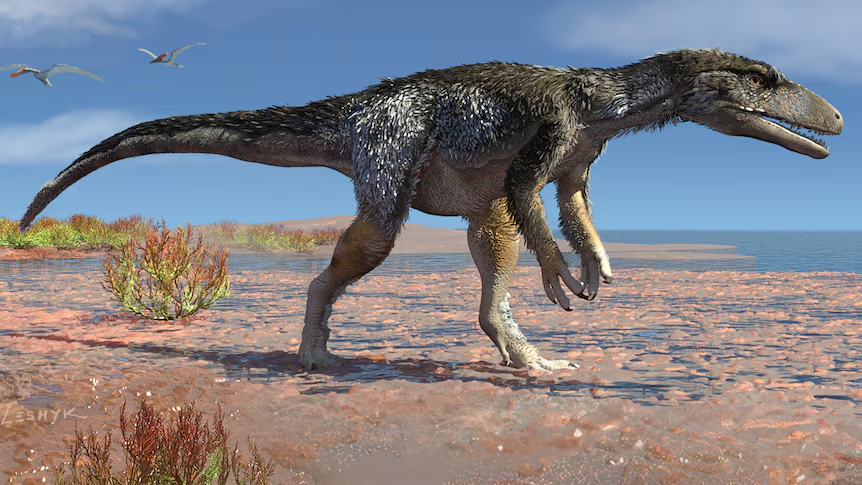
Coastal microbes you would find at the beach may have helped preserve red blood cells in a 115-million-year-old dinosaur fossil, a new study claims. An international team of scientists, led by Kliti Grice at Curtin University, reports finding traces of heme in the hind limb bones of a Brazilian feathered dinosaur, Aratasaurus museunacionali. Heme is a molecule in haemoglobin, a protein red blood cells use to carry oxygen.The molecules were found inside ellipsoid structures in the vascular canals — tiny channels for blood transport — in the dinosaur bone, what is the importance of Dinosaur studies in the modern age ?

Previous Article
Apple may be developing $1,000 robotic tabletop displayNext Article
SpaceX splits civilian and military networks